
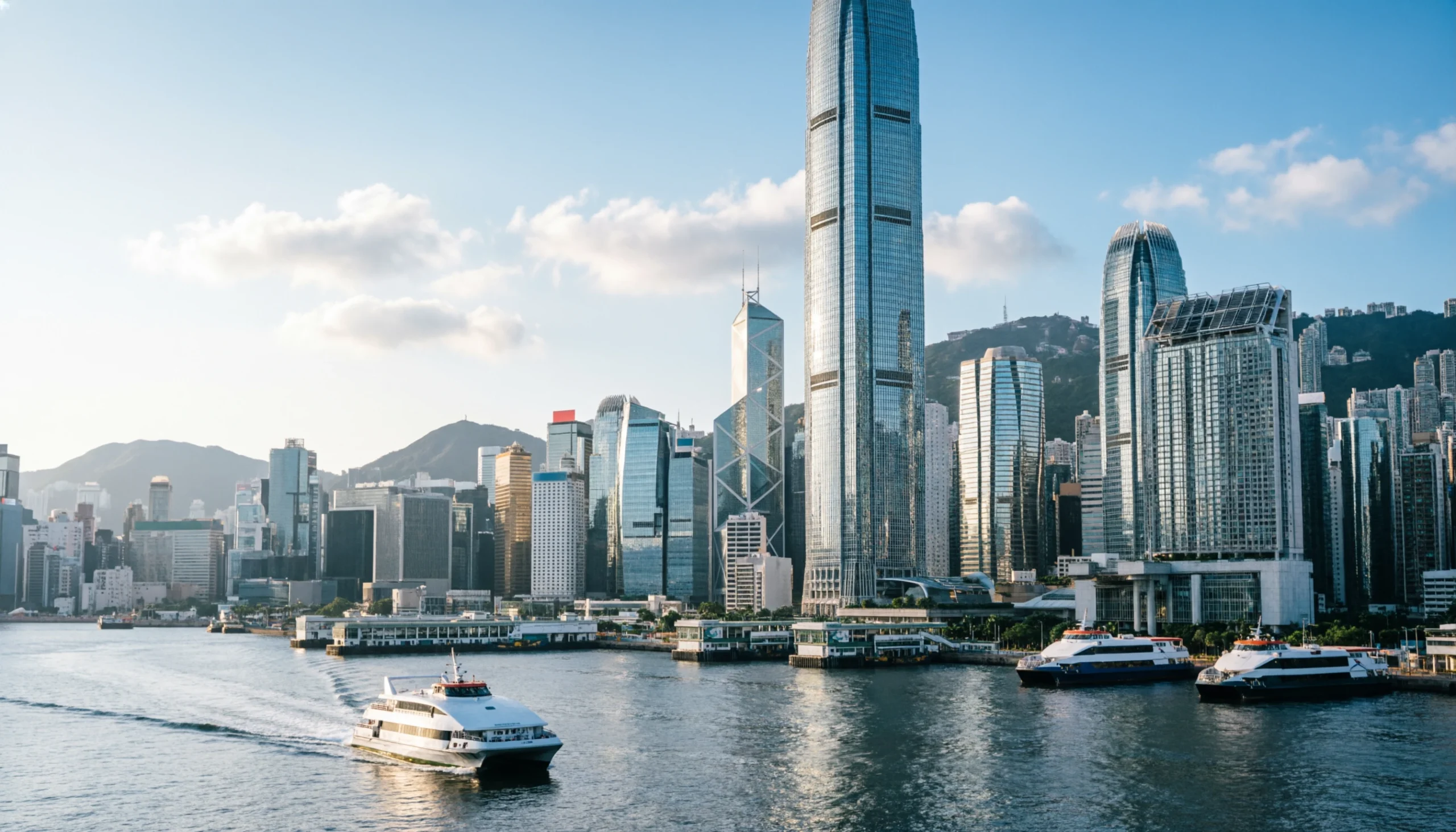
Chinese Tech Firms Turn to Hong Kong as Gateway for Global Expansion
In a busy hotel lobby on Hong Kong Island, a delivery robot smoothly navigates its way toward a lift. As guests step out, the machine patiently waits before entering and selecting the correct floor. While the action appears effortless, it reflects a complex technological capability—one that Chinese tech companies are increasingly showcasing in Hong Kong as they prepare for global expansion.
The robot is developed by Yunji, a mainland Chinese technology firm specializing in service robotics for hotels, hospitals, and factories. For Yunji, Hong Kong is not just another market—it is a strategic launchpad for international growth.
“We aim to succeed in Hong Kong first, and then expand outward,” said Xie Yunpeng, the company’s vice-president.
Hong Kong: A Strategic Gateway for Chinese Tech Firms
Hong Kong is rapidly emerging as a preferred destination for mainland Chinese technology companies seeking to expand beyond domestic borders. The city offers a unique combination of global financial access, international exposure, and regulatory credibility.
This shift comes at a time when Chinese tech firms are facing increasing scrutiny in Western markets. Concerns over data security, government influence, and market dominance—often referred to as “China risk”—have made it more difficult for these companies to access capital, customers, and trust in the United States and Europe.
As a result, many firms are recalibrating their strategies, with Hong Kong becoming their first step toward internationalization.
Surge in Listings and Investments
The trend is clearly visible in financial data. According to a report by PricewaterhouseCoopers, the number of mainland Chinese companies listing on the Hong Kong Stock Exchange surged to 76 last year, up from just 30 in 2024—an increase of over 150%.
Additionally, Invest Hong Kong, the city’s investment promotion agency, has reported a significant rise in the number of mainland firms establishing or expanding operations in the region. The innovation and technology sectors are among the biggest contributors to this growth.
Industry experts say this reflects a broader shift in strategy.
Xiaomeng Lu, a director at Eurasia Group, noted that geopolitical challenges are forcing Chinese companies to reconsider their global ambitions.
“Hong Kong has become their best option to attract international investors and present themselves as global players beyond mainland constraints,” she explained.
A Bridge Between China and the World
Hong Kong’s role as a bridge between China and global markets is becoming increasingly important. The city offers a familiar legal system, international financial standards, and a more open business environment compared to mainland China.
Wendy Chang of the Mercator Institute for China Studies highlighted that Hong Kong is actively positioning itself as a “connector” for Chinese companies. Government policies are being streamlined to facilitate faster share listings and support mainland firms in setting up operations.
This supportive ecosystem allows companies to test their products and services in a diverse, international environment before expanding further.
Technology Self-Reliance Driving Strategy
The growing importance of Hong Kong is also tied to China’s broader economic and political goals. The Chinese government is prioritizing technological self-reliance, aiming to reduce dependence on foreign hardware and software.
This objective is a key component of the country’s 15th Five-Year Plan, with particular emphasis on sectors such as artificial intelligence and semiconductors.
Given rising tensions with the United States, technology is no longer just an economic priority—it has become a strategic necessity.
Paul Triolo, a partner at DGA Group, emphasized that Hong Kong’s value has increased significantly in this context.
“The strategic importance of Hong Kong for high-tech Chinese firms has grown as they navigate global challenges,” he said.
Building Trust and Compliance
Beyond funding and exposure, Hong Kong also offers Chinese companies an opportunity to build trust with international stakeholders.
Alicia Garcia-Herrero, chief economist for Asia-Pacific at Natixis, noted that the city allows firms to demonstrate compliance with global standards.
This is particularly important for companies dealing with sensitive data and cross-border operations.
For example, MiningLamp Technology, an AI software company, established its Hong Kong presence to test data compliance frameworks. Its founder, Wu Minghui, described the city as a “data compliance transfer station,” where firms can refine their processes before entering other markets.
Real-World Testing Ground
For companies like Yunji, Hong Kong serves as a real-world testing environment. The city’s fast-paced, international setting provides valuable insights into how products perform under diverse conditions.
From navigating crowded hotel lobbies to interacting with global customers, these experiences help companies refine their technologies and build confidence among potential clients.
Challenges Still Remain
Despite the advantages, success in Hong Kong does not guarantee smooth expansion into Western markets. Regulatory barriers, political concerns, and ongoing geopolitical tensions continue to pose challenges.
However, Hong Kong offers a crucial stepping stone—one that allows Chinese tech firms to adapt, innovate, and build credibility on the global stage.
Source link: https://www.bbc.com/