Oil Prices Surge Above $115 as Middle East Conflict Intensifies; Asian Markets Tumble
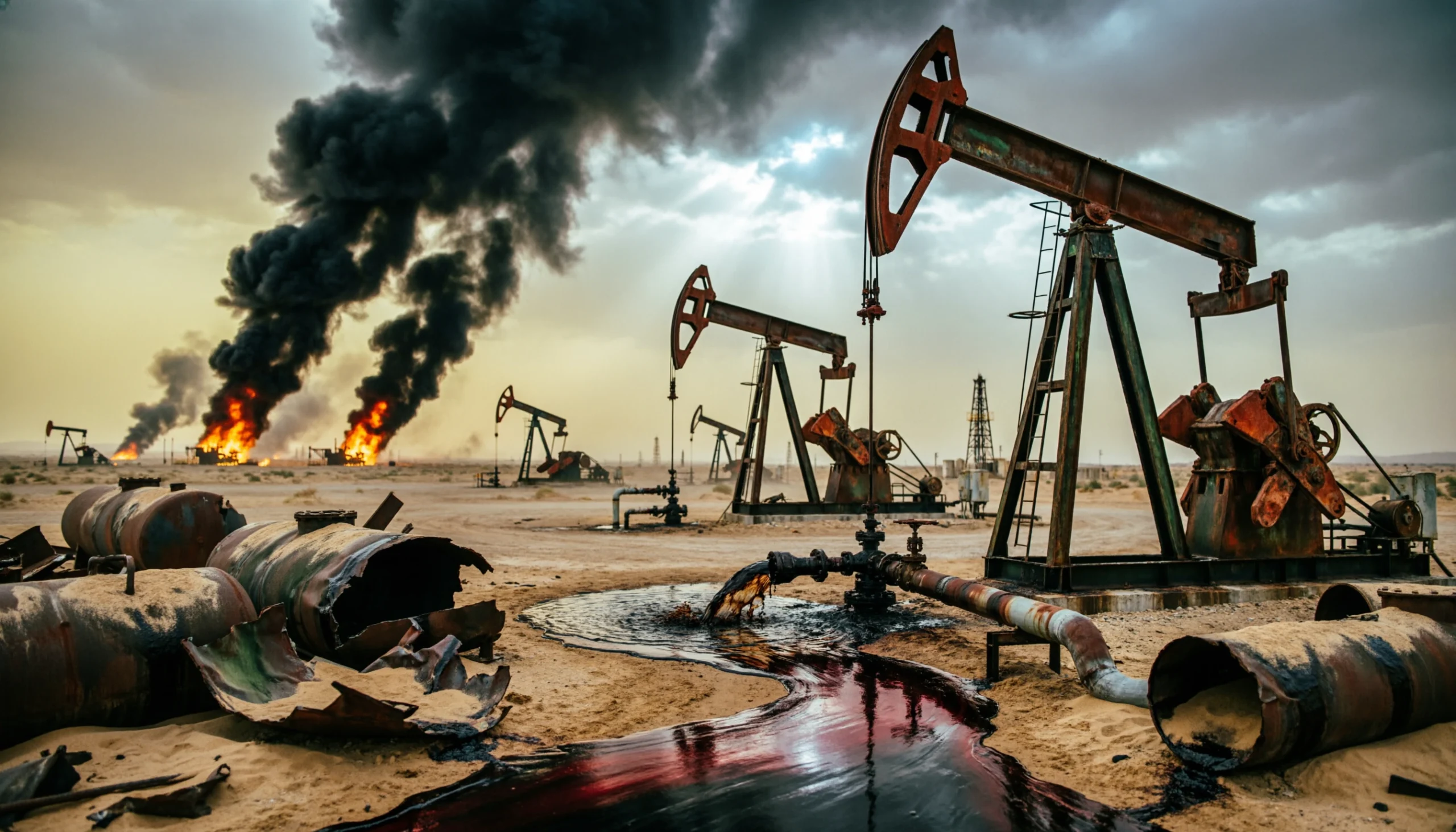
Global oil prices soared while Asian stock markets declined sharply on Monday as the ongoing US-Israel-Iran conflict entered its fifth week, triggering fresh fears of supply disruptions and economic instability.
Brent crude, the international oil benchmark, surged more than 3% to trade above $115 per barrel, marking one of its strongest rallies in recent years. Meanwhile, US West Texas Intermediate (WTI) crude also climbed significantly, crossing $103 per barrel after gaining nearly 3.5%. Analysts suggest that Brent crude is now on track for its biggest monthly gain on record, reflecting the severity of the geopolitical tensions impacting global energy markets.
Asian Markets Slide Amid Rising Oil Prices
The sharp spike in oil prices has weighed heavily on investor sentiment across Asia. Major stock indices opened lower on Monday, with Japan’s Nikkei 225 falling by around 4.5%, while South Korea’s Kospi dropped nearly 4%. Broader Asian markets also witnessed declines as investors reacted to the escalating conflict and rising inflation concerns.
Market experts believe that higher energy costs could lead to tighter monetary policies and slow economic growth, adding further pressure on global equities.
Conflict Escalation Fuels Energy Supply Concerns
The recent surge in oil prices comes after Iran-backed Houthi rebels in Yemen joined the conflict by launching attacks on Israel over the weekend. This development has intensified fears of a wider regional war that could severely disrupt critical oil supply routes.
Adding to the tension, Iran has threatened to expand retaliatory strikes, raising concerns about the safety of key infrastructure and shipping lanes. The Strait of Hormuz, a crucial chokepoint through which nearly 20% of the world’s oil and gas supply passes, remains at the center of the crisis. Any disruption in this region has immediate global repercussions.
Experts warn that shipping routes such as the Bab al-Mandeb strait near Yemen could also face blockades, potentially affecting an additional 10% of global oil supplies and further straining supply chains.
Political Rhetoric Adds to Market Volatility
Geopolitical uncertainty has been heightened by strong statements from US leadership. US President Donald Trump, in a recent interview, suggested the possibility of seizing Iran’s key oil infrastructure, including Kharg Island, one of the country’s major export hubs.
Such remarks have increased market volatility, as traders assess the likelihood of further escalation. Over the weekend, Iran’s leadership also issued warnings of potential military responses, while additional US troops were deployed to the Middle East, signaling a prolonged conflict.
Oil Supply Disruptions Drive Price Rally
The ongoing war has already led to significant disruptions in oil production and transportation. Tanker movements through the Persian Gulf have slowed considerably, and several shipments have been delayed or rerouted.
According to analysts, the closure or restriction of the Strait of Hormuz has been a major factor behind the recent price surge. Even temporary disruptions in this region can create supply shortages and push prices higher.
Energy experts estimate that if the conflict continues, oil prices could climb even further in the coming weeks. Some forecasts suggest that Brent crude could reach as high as $130 per barrel if supply constraints worsen.
Impact Yet to Fully Reach Consumers
Despite the sharp rise in crude oil prices, the full impact on consumers has not yet been felt. Industry experts note that there is typically a delay before higher crude costs translate into increased fuel prices at the retail level.
However, if the current trend continues, consumers worldwide could soon face higher costs for fuel, transportation, and essential goods. Rising energy prices are also expected to contribute to inflation, putting additional pressure on household budgets.
Global Economic Risks Increase
Economists warn that sustained high oil prices could trigger a broader economic slowdown. As energy and food costs rise, consumer spending may decline, leading to reduced economic activity.
There are also concerns about the potential ripple effects on industries such as manufacturing, logistics, and aviation, all of which rely heavily on stable fuel prices.
Shipping experts have highlighted that even if the Strait of Hormuz reopens quickly, the impact on supply chains could persist for weeks or months due to delays in shipments and refinery operations.
Comparison to Past Oil Crises
Some analysts believe that the current situation could rival or even exceed the oil crises of the 1970s in terms of economic impact. The scale of disruption, combined with modern global supply chain dependencies, makes the current crisis particularly significant.
Oil prices were around $72 per barrel in late February before the conflict escalated. Since then, prices have surged dramatically, reaching multi-year highs and causing widespread market instability.
Source link: https://www.bbc.com/